

As electricity prices continue to rise and sustainability becomes a core business priority, many companies are turning to solar power to cut costs and reduce their environmental footprint. For businesses, investing in solar panels is no longer just an eco-friendly decision, it’s a smart financial strategy.
In cities and industrial hubs across India, commercial properties like office complexes, shopping malls, factories, and warehouses are embracing solar energy to meet a significant portion of their power needs. With advancements in solar technology, today’s commercial solar panels offer higher efficiency, longer lifespans, and faster returns on investment than ever before.
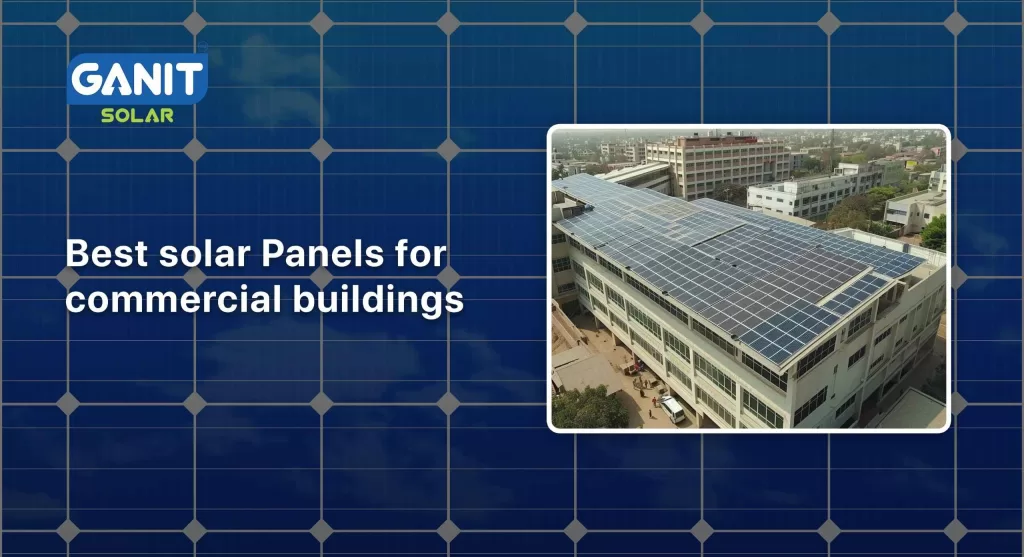
Whether you’re a small business owner looking to lower monthly electricity bills or a large enterprise aiming for long-term energy independence, choosing the best solar panels for commercial buildings ensures maximum performance and reliability. This blog will guide you through the benefits, types, installation tips, and cost considerations so you can make the right choice for your commercial property.
Understanding Commercial Solar Technology
1. How Solar Panels Generate Electricity
When choosing the best solar panels for commercial buildings, it’s important to understand the basic technology that powers them. This knowledge ensures you make the right decision for efficiency, cost savings, and long-term performance.
2. AC vs DC Power Conversion (Inverters)
Since most commercial equipment and the utility grid operate on alternating current (AC), inverters are used to convert the DC power produced by solar panels into AC.
- String Inverters: Centralized conversion for multiple panels; cost-effective but may lose efficiency if one panel underperforms.
- Microinverters: Individual inverters for each panel; maintain high efficiency even with shading issues.
- Hybrid Inverters: Integrate solar, battery, and grid power for maximum flexibility—often recommended when installing the best solar panels for commercial buildings that require backup power.
3. Grid-Tied, Off-Grid, and Hybrid Systems Explained
- Grid-Tied Systems: Connected directly to the utility grid. Excess power is sent back for credit through net metering. Ideal for businesses with consistent grid access.
- Off-Grid Systems: Completely independent of the grid, using battery storage to supply power 24/7. Suitable for remote facilities but requires larger investments in storage.
- Hybrid Systems: A combination of grid connection and battery storage. Offers the reliability of the grid plus backup power during outages, popular for commercial spaces that require uninterrupted operations.
Key Features to Look for in the Best Solar Panels for Commercial Buildings
Selecting the best solar panels for commercial buildings is more than just comparing prices, it’s about ensuring maximum performance, durability, and return on investment over decades. Here are the essential features every business should consider before installation.
1. High Energy Efficiency
Energy efficiency determines how much sunlight your panels can convert into usable electricity. The higher the efficiency, the more power you generate in the same amount of roof space crucial for commercial premises where every square metre counts. Look for panels with efficiency ratings of 20% or above for optimal performance.
2. Long Lifespan and Warranty
The best solar panels for commercial buildings typically come with a performance warranty of 25 years or more. A strong warranty ensures your panels will continue to produce power at a high level well into the future, giving your business stability in energy costs.
3. Weather Resistance and Build Quality
Commercial buildings face varying weather conditions, from heavy rains to intense summer heat. High-quality panels are designed to withstand wind loads, hail impact, and UV exposure without compromising output. Ensure the panels are certified for durability under extreme conditions.
4. Low Degradation Rate
All solar panels degrade over time, but premium options lose efficiency more slowly—often less than 0.5% per year. Lower degradation means your system will maintain strong output even after decades of use.
5. Brand Reputation and After-Sales Support
Working with a trusted manufacturer ensures consistent product quality and reliable support. Choose brands that offer local service centres, quick replacements, and technical assistance to safeguard your investment.
Benefits of Solar for Commercial Buildings
Investing in the best solar panels for commercial buildings is not only a step towards sustainability but also a smart financial decision. From cost savings to brand enhancement, here’s why businesses are making the switch.
1. Lower Operational Costs
One of the biggest advantages of solar energy for commercial properties is the significant reduction in monthly electricity bills. By generating your own power, you reduce dependence on the grid, leading to substantial long-term savings. For businesses with high energy demands, these savings can quickly offset the initial investment in the best solar panels for commercial buildings.
2. Green Brand Image
Modern consumers and clients increasingly prefer environmentally responsible companies. Installing solar panels demonstrates your commitment to sustainability, reducing your carbon footprint and enhancing your eco-friendly reputation. This can also become a strong selling point in marketing and corporate social responsibility (CSR) initiatives.
3. Energy Security
Commercial operations can be heavily affected by grid fluctuations, power outages, and rising electricity tariffs. With a solar installation, especially when paired with battery storage, you gain greater control over your energy supply. This ensures business continuity, even during grid instability, safeguarding production and service delivery.
4. Government Incentives
In India, various government schemes and tax benefits make solar adoption even more attractive. Businesses may qualify for capital subsidies, accelerated depreciation, and GST advantages, further reducing the total cost of ownership. Choosing the best solar panels for commercial buildings ensures maximum efficiency, making these incentives even more valuable.
Types of Solar Panels for Commercial Use
Choosing the best solar panels for commercial buildings starts with understanding the different types available. Each panel type has its own strengths, making it important to match the right technology with your business needs, roof space, and budget.
1. Monocrystalline – High Performance for Limited Space
Monocrystalline panels are made from single-crystal silicon, offering the highest efficiency rates in the market. They’re ideal for commercial rooftops with limited space, as they produce more power per square metre. While they tend to be more expensive, their superior performance and sleek appearance make them a popular choice for premium installations.
2. Polycrystalline – Budget-Friendly and Reliable
Polycrystalline panels are slightly less efficient than monocrystalline, but they’re far more affordable. They are a reliable option for businesses with larger roof areas and a focus on cost-effectiveness. For many companies, polycrystalline panels strike the perfect balance between upfront investment and long-term returns.
3. Thin-Film – Lightweight for Unique Structures
Thin-film solar panels are significantly lighter than their crystalline counterparts, making them ideal for unconventional rooftops, structures with weight restrictions, or projects requiring flexibility. While they have lower efficiency, they perform better in low-light conditions and can be installed on surfaces where traditional panels are not feasible.
4. Bifacial – Double-Sided Power Generation
Bifacial panels generate electricity from both the front and rear sides, capturing reflected sunlight from the roof or ground surface. This technology can increase energy output by up to 15–20%, making it highly efficient for large commercial sites with reflective surfaces. While they cost more initially, the increased generation potential offers excellent long-term returns.
Latest Innovations in Commercial Solar Panels
The solar industry continues to evolve rapidly, with new technologies enhancing efficiency, durability, and monitoring capabilities. When choosing the best solar panels for commercial buildings, understanding the latest innovations can help you make an informed investment.
1. Half-Cut Cell Technology
Half-cut cell solar panels use cells that are physically divided into two halves. This design reduces electrical resistance and heat build-up, leading to higher efficiency and better performance in partial shading conditions. For commercial buildings where consistent output is essential, this technology offers improved reliability and energy yield.
2. PERC (Passivated Emitter Rear Cell) Panels
PERC technology adds an extra layer to the back of solar cells, allowing them to absorb more sunlight and generate more power without increasing panel size. This means higher efficiency levels, particularly beneficial for sites with limited roof space or higher power demands.
3. Smart Monitoring Systems
Modern commercial solar systems are often paired with intelligent monitoring platforms that provide real-time performance data. This allows facility managers to track energy production, detect faults quickly, and optimise system output. Having smart monitoring ensures that the best solar panels for commercial buildings continue to operate at peak efficiency throughout their lifespan.
4. Integration with Battery Storage
Combining solar panels with commercial-grade battery systems enables businesses to store excess energy for use during peak demand or grid outages. This not only increases energy independence but also helps reduce electricity costs by avoiding high tariff periods. For large facilities, it can be a game-changer in operational resilience.
Factors to Consider Before Installation
Before committing to the best solar panels for commercial buildings, it’s essential to evaluate a few key factors that will determine the success and return on your investment.
1. Roof Condition and Space Availability
Inspect your building’s roof for structural integrity, load-bearing capacity, and available space. Older or damaged roofs may require repairs before installation. The layout and angle of your roof will also influence how many panels you can fit and their energy output.
2. Energy Consumption Patterns
Understanding your business’s daily, monthly, and seasonal energy needs is crucial. Analysing electricity bills and peak usage times will help you size your system correctly and ensure that it covers the maximum portion of your demand.
3. Local Climate and Sunlight Hours
Solar performance varies based on regional weather conditions and sunlight availability. Even in areas with occasional cloud cover, the best solar panels for commercial buildings can still generate substantial energy if properly designed for the location.
4. Budget and Financing Options
Solar installations require a significant upfront investment, but various financing models—such as loans, leasing, and power purchase agreements (PPAs)—can make them more affordable. Understanding available subsidies, tax benefits, and depreciation advantages is also essential.
5. Compliance and Permits
Commercial solar projects often require local authority approvals, grid connection permits, and compliance with electrical standards. Working with an experienced installer ensures that your project meets all regulatory requirements without delays.
6. Future Expansion Plans
If your business might expand in the coming years, consider a system that can be easily upgraded. Scalable designs ensure you can add more panels or integrate battery storage later without major modifications.
Installation Process for Commercial Solar Panels
Installing the best solar panels for commercial buildings is a multi-step process that requires careful planning, technical expertise, and regulatory compliance. Here’s a breakdown of the typical installation journey:
1. Initial Consultation and Site Assessment
The process begins with a detailed consultation to understand your energy needs and business goals. A site survey is conducted to assess roof condition, structural capacity, orientation, shading, and available installation space.
2. System Design and Proposal
Based on the assessment, engineers design a customised solar system, specifying the panel type, number of units, inverter capacity, and wiring layout. The proposal includes projected energy generation, estimated savings, and payback period.
3. Securing Permits and Approvals
Before work begins, the installer obtains all necessary permits, including grid connection approval and compliance certifications. This step ensures the installation meets all safety, electrical, and local authority standards.
4. Procurement of Equipment
Once approved, the best solar panels for commercial buildings along with inverters, mounting structures, and wiring are sourced from trusted suppliers to ensure durability and efficiency.
5. Physical Installation
Technicians mount the panels on the roof or ground structures, install the inverter system, and connect all wiring. Proper mounting ensures the panels can withstand weather conditions while maintaining optimal tilt for maximum sunlight capture.
6. Testing and Quality Checks
The system undergoes rigorous performance testing to ensure all components work correctly, connections are secure, and output meets expectations.
7. Grid Connection and Commissioning
After testing, the system is connected to the grid (for grid-tied setups) or to battery storage (for hybrid/off-grid systems). The installer provides training on system operation and monitoring tools.
8. Post-Installation Support
A professional installer offers ongoing maintenance, performance monitoring, and support to ensure your solar investment continues to deliver long-term benefits.
Cost, ROI & Financial Benefits
Investing in the best solar panels for commercial buildings is not just an environmental decision, it’s a strategic financial move with long-term returns. Let’s break down the key financial aspects
1. Initial Investment Range for Commercial Systems
The upfront cost of a commercial solar installation varies depending on system size, panel type, and installation complexity. In India, commercial rooftop solar systems generally range between ₹45,000 to ₹65,000 per kW (kilowatt). For large-scale setups, bulk purchasing can further reduce per-unit costs.
2. Average Payback Period (3–5 Years)
Most commercial solar projects achieve payback within three to five years. This rapid return is due to significant electricity bill reductions, combined with government subsidies and tax incentives. After the payback period, the energy generated is essentially free, offering decades of cost-free electricity.
3. Long-Term Financial Savings
Over a 25-year lifespan, the best solar panels for commercial buildings can save a business tens of lakhs in electricity expenses. These savings are further protected against rising energy tariffs, giving your business predictable energy costs.
4. Tax Benefits, Subsidies, and Accelerated Depreciation
Businesses in India can take advantage of:
- Capital subsidies on eligible rooftop systems
- Accelerated depreciation benefits (up to 40% under current tax laws)
- GST input credit on solar equipment purchases
- State-specific incentives, depending on location
These financial advantages reduce the upfront cost and improve ROI, making solar a smart and profitable investment.
Common Myths About Commercial Solar Panels
Even with the growing popularity of the best solar panels for commercial buildings, misconceptions still prevent many businesses from embracing solar energy. Let’s debunk some of the most common myths.
1. Solar Doesn’t Work in Cloudy Weather
Modern solar panels are designed to generate power even under diffused sunlight. While output is slightly reduced on cloudy days, systems are engineered to compensate over the year, ensuring consistent performance. Countries with far less sunshine than India have thriving solar sectors proof that clouds are no obstacle.
2. Maintenance is Too Expensive
In reality, solar maintenance is minimal and affordable. Routine cleaning of panels and periodic inspections are usually all that’s required. When you invest in the best solar panels for commercial buildings, you benefit from long warranties and durable designs that keep upkeep costs low.
3. Panels Don’t Last Long
High-quality commercial solar panels typically last 25–30 years or more, retaining over 80% of their original efficiency. With proper installation and care, they provide decades of reliable energy generation, long after the payback period has ended.
4. Installation Disrupts Business Operations
Professional installers work around your schedule to ensure minimal disruption. In many cases, rooftop installations can be completed without interfering with daily operations, allowing your business to keep running smoothly during the process.
How to Choose the Right Solar EPC Company
Selecting the right Solar EPC (Engineering, Procurement, and Construction) company is just as important as choosing the best solar panels for commercial buildings. The EPC partner you work with will determine the efficiency, durability, and long-term performance of your solar investment.
1. Factors to Check in a Contractor
- Proven Track Record – Look for companies with a portfolio of successful commercial installations and client testimonials.
- Technical Expertise – Ensure the contractor understands industrial energy requirements, shading analysis, and panel efficiency optimisation.
- End-to-End Service – The best EPC companies handle everything from design and procurement to installation and maintenance.
- Warranty Support – Strong after-sales service and warranty claim assistance are essential for peace of mind.
2. Importance of Certified Installation Teams
Commercial solar systems require precision engineering and compliance with safety standards. Certified installation teams:
- Adhere to MNRE (Ministry of New and Renewable Energy) guidelines.
- Use proper safety protocols during installation.
- Optimise panel placement for maximum sunlight capture.
3. Why Ganit Star Engineering Stands Out
Ganit Star Engineering is a trusted name in commercial solar solutions, offering:
- Expertise in delivering high-efficiency solar systems for diverse industries.
- Partnerships with leading solar panel brands.
- A commitment to timely project completion and superior after-sales service.
Government Incentives for Commercial Solar Projects
Government policies make adopting the best solar panels for commercial buildings more affordable and financially attractive. Both the central and state governments offer benefits to encourage renewable energy adoption.
1. Central Government Policies
- Accelerated Depreciation – Businesses can claim up to 40% depreciation in the first year, significantly reducing taxable income.
- Subsidised Loans – Access to low-interest loans through public sector banks for solar projects.
- Renewable Energy Certificates (REC) – Earn tradable certificates by generating surplus clean energy.
2. State-Level Subsidies
Subsidies vary depending on the state. Some states offer:
- Upfront cost subsidies for installation.
- Waivers on wheeling and transmission charges.
- Special tariff rates for solar-generated electricity.
3. Net Metering Benefits
Net metering allows businesses to feed surplus power back into the grid, earning credits that offset future electricity bills. This can:
- Shorten the payback period.
- Provide ongoing financial savings.
- Encourage better utilisation of installed capacity.
How to Monitor Solar System Performance
Even the best solar panels for commercial buildings need regular monitoring to ensure they operate at peak efficiency. By tracking performance data, you can identify issues early, maximise energy generation, and safeguard your return on investment.
Remote Monitoring Software
Modern solar systems come with advanced remote monitoring tools that:
- Allow you to check energy output in real time from any device.
- Send alerts if performance drops below expected levels.
- Track daily, monthly, and yearly production trends.
These systems help facility managers respond quickly to technical issues without waiting for physical inspections.
Energy Management Dashboards
Energy dashboards provide a visual representation of your solar plant’s performance, including:
- Generation Data – How much energy your panels produce.
- Consumption Trends – How much of that energy is used on-site vs exported to the grid.
- Savings Tracker – How much you’ve saved on electricity bills over time.
An effective dashboard allows you to analyse patterns, optimise usage, and ensure your solar system consistently delivers value.
Wrapping Up
Switching to solar is no longer just an environmental choice, it’s a smart business decision. The best solar panels for commercial buildings offer long-term savings, energy independence, and a positive brand image. With technology advancing rapidly and government incentives making installation more affordable than ever, now is the perfect time for businesses to make the move.
At Ganit Star Engineering, we don’t just install solar panels, we deliver complete, customised energy solutions. From site assessment and design to installation, maintenance, and performance monitoring, our certified team ensures your commercial solar project runs smoothly from start to finish. We work with the latest high-performance solar technologies to maximise your ROI and keep your business ahead in the green energy race.
Whether you operate a manufacturing unit, office complex, shopping centre, or industrial facility, Ganit Star Engineering is your trusted partner for reliable, efficient, and cost-effective solar power solutions. Let us help you harness the sun and power your business into a cleaner, brighter future.
Frequently Asked Questions (FAQs)
1. What are the best solar panels for commercial buildings?
The best choice depends on your energy needs, roof space, and budget. Monocrystalline panels are highly efficient for limited spaces, while polycrystalline panels are cost-effective for larger installations. Ganit Star Engineering helps businesses choose the most suitable panels after a detailed site assessment.
2. How much does a commercial solar installation cost in India?
Commercial solar systems can range from ₹35–₹55 per watt, depending on the panel type, inverter, and installation complexity. Ganit Star Engineering offers transparent pricing and customised packages to fit your budget.
3. How long does it take to recover the investment (ROI)?
Most commercial solar projects achieve payback within 3–5 years, with savings continuing for 20–25 years. Factors such as government subsidies and net metering can speed up ROI, and our experts ensure you benefit from all available incentives.
4. Can solar panels work during cloudy days or at night?
Yes, solar panels still generate electricity on cloudy days, although at reduced capacity. At night, they don’t produce energy, but you can store excess power in batteries or use net metering to draw from the grid when needed.
5. How much maintenance do commercial solar panels need?
Solar panels require minimal maintenance, mostly periodic cleaning and inspections. Ganit Star Engineering offers complete O&M (Operation & Maintenance) services to ensure maximum efficiency.
6. How can I monitor my solar system’s performance?
With remote monitoring software and energy dashboards, you can track real-time energy production and savings. All systems installed by Ganit Star Engineering include advanced monitoring solutions for complete peace of mind.